
Why Do We Care So Much About Evidence-Based Treatment?
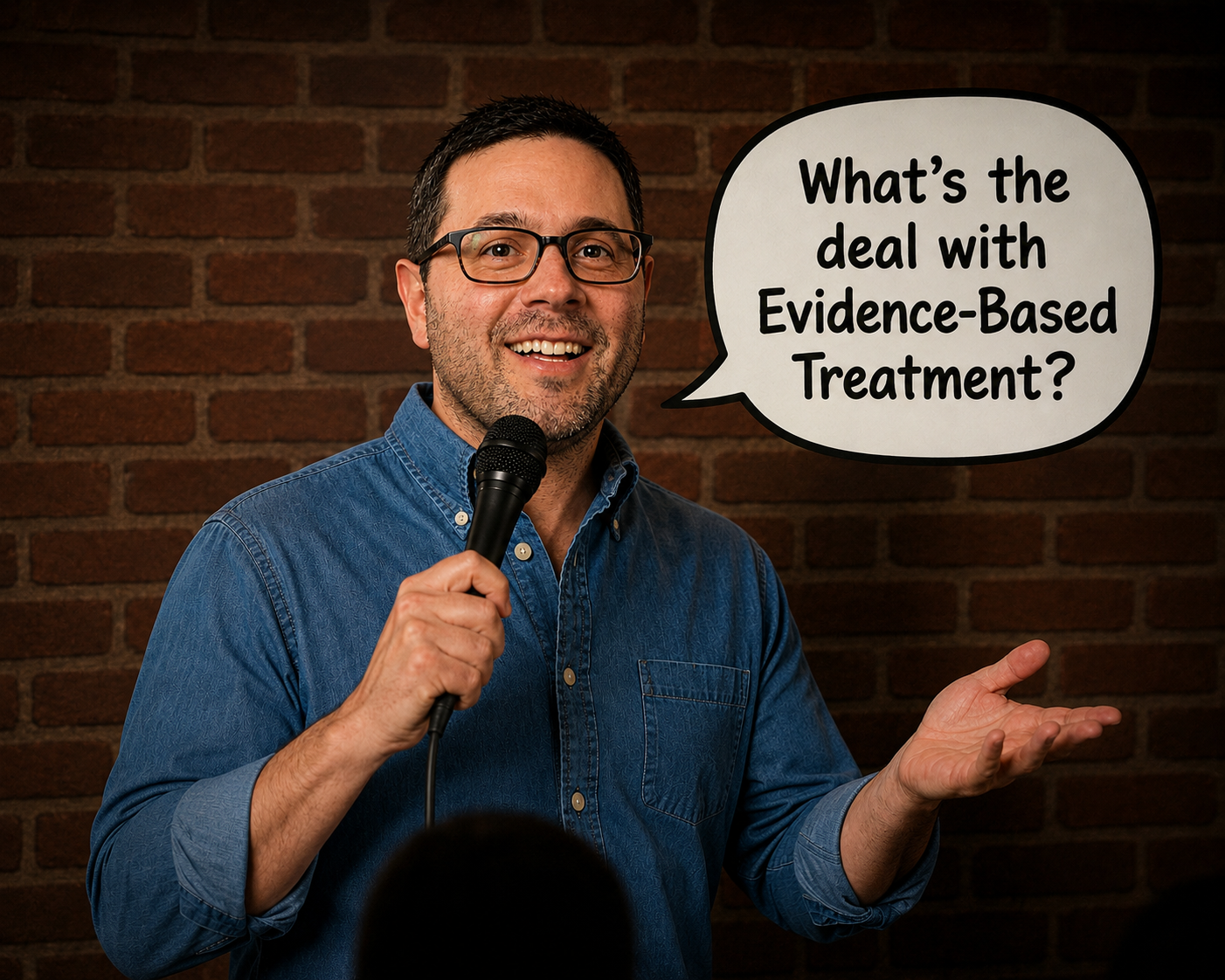
Why We Use Evidence-Based Treatments for OCD
If you're looking for therapy for OCD, you've probably seen the phrase evidence-based treatment come up again and again, including on our website. But what does that actually mean? And why is it something you should care about?
We’ve built a practice around these principles, so figured it’d be helpful to explain why we feel evidence-based treatment is so important.
What Does "Evidence-Based" Mean?
Evidence-based treatments are therapeutic approaches that have been studied and shown to be effective through scientific research. Rather than relying on intuition, trends, or anecdotes, evidence-based therapies are supported by data demonstrating that they help people improve.
This doesn’t mean that therapy just becomes a robotic, one-size-fits-all approach to treatment. It means that we use research-backed interventions, combined with our unique understanding of our clients and their individual experiences. This is flexibility within fidelity — we can adhere to a treatment model, while dynamically adjusting to suit the needs of our clients.
Effective OCD treatment requires creativity, flexibility, and collaboration. Our therapists use evidence-based principles as a roadmap, but we tailor treatment to each individual's symptoms, strengths, and goals.
Why This Matters for OCD
Our group treats a lot of people with OCD. We’ve seen first-hand the damage that has been done to our clients at the hands of well-intentioned therapists who didn’t know what they didn’t know. We’ve seen clients who have received “therapy” for OCD only to see their symptoms worsen over time. We’ve seen years and decades lost to OCD — time unnecessarily spent in the throes of an illness with a clear, evidence-based treatment that works.
Sadly, that time spent in ineffective treatment can potentially exacerbate OCD symptoms. Many of the strategies that seem like they should help actually end up strengthening OCD. For example, spending therapy sessions analyzing intrusive thoughts, seeking reassurance, or trying to eliminate uncertainty can unintentionally reinforce the cycle that keeps OCD going.
Research over the past several decades has consistently found that the most effective treatment for OCD is a specialized form of Cognitive Behavioral Therapy (CBT) called Exposure and Response Prevention (ERP). You can learn more about ERP here. Essentially, ERP helps people gradually face feared situations, thoughts, feelings, or sensations while resisting the compulsions and rituals that perpetuate OCD. Over time, the brain learns that anxiety and uncertainty can be tolerated without relying on compulsions.
While ERP can sound intimidating at first, it is one of the most well-researched psychological treatments available and has helped countless people reclaim their lives from OCD. It’s not a perfect treatment, but it’s the best option we have and it’s recommended by the International OCD Foundation as the first-line treatment for OCD.
Why We Prioritize Specialized Training
Providing effective OCD treatment requires specialized training and ongoing education. Most therapists receive limited training in OCD during graduate school, which contributes to OCD being frequently misdiagnosed or treated with approaches that aren't particularly effective. Therapists simply don’t know what they don’t know. And to be clear: we’re not judging. Many of our clinicians found ourselves in graduate programs that barely mentioned OCD in their curriculum. We had to seek out specialized training, finding work experience and mentors that helped expand our knowledge and expertise.
Our clinicians regularly participate in advanced training, consultation, and continuing education focused specifically on OCD and anxiety disorders. We believe that clients deserve care from professionals who understand the latest research and know how to apply it effectively. In fact, our therapists regularly train other clinicians to treat OCD. You can catch several of us speaking the upcoming IOCDF Annual OCD Conference.
What This Means for You
Evidence-based treatment doesn't guarantee that therapy will always feel easy. It’s not a cure-all or easy button. In fact, effective OCD treatment often involves doing difficult things on purpose. But it does mean that the work you're doing is grounded in approaches that have been shown to help people with OCD.
Our goal is not simply to help you feel better in the moment. It's to help you build lasting skills that allow you to live the life you want—even when uncertainty, anxiety, or intrusive thoughts show up.
This is a hill we’re willing to die on. Everyone has the right to choose their own path — if your uncle’s roommate cured their OCD with crystals and supplements, then by all means, give it a shot if you want. But we think we have an obligation to provide our clients with treatment backed by sound scientific principles. That's why evidence-based care is at the heart of everything we do.